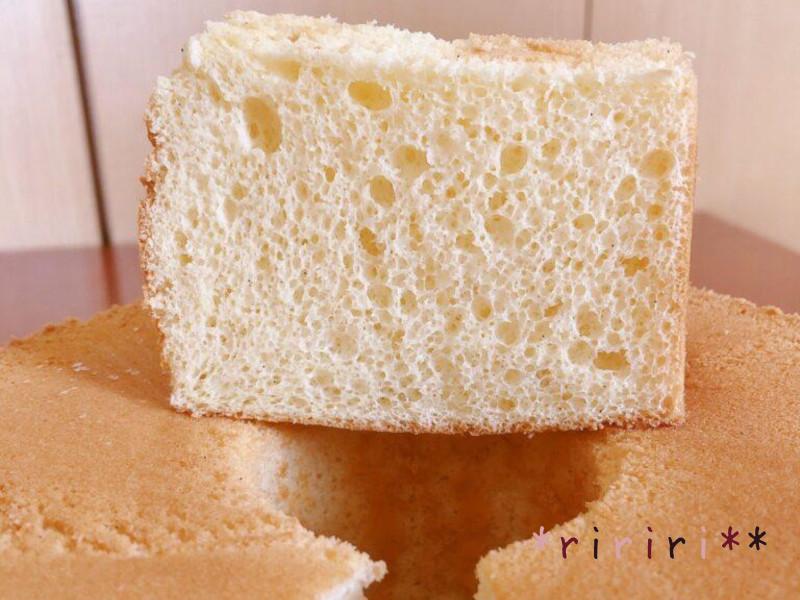
A chiffon cake that stays low usually has a structure problem before it has a flavor problem. Start with the egg foam, final batter texture, pan, and oven heat.
Do not fix the problem by adding more leavener first. Chiffon cake depends mostly on meringue and controlled expansion, so the first test should be about air and heat.
Quick diagnosis
If the batter looked loose before baking and the cake stayed short, the foam probably weakened before it reached the oven. If the batter looked full but the cake stopped rising early, oven temperature or pan size may be the stronger clue.
- Flat from the start: Check meringue volume and final folding.
- Rises a little then stops: Check oven heat, rack position, and pan size.
- Low and dense: Treat it as both a rise problem and a dense-crumb problem.
Likely causes
The most common causes are under-whipped meringue, over-folding, oily or heavy batter, a non-tube pan, weak oven heat, and opening the door too early.
- Weak meringue: Soft foam cannot lift the batter long enough.
- Over-folding: The batter loses trapped air before baking starts.
- Wrong pan: A chiffon cake needs wall support as it climbs.
Quick test
Make the same recipe in the same tube pan, but stop folding as soon as no dry streaks remain and check the oven with a thermometer. If the cake rises higher, batter handling or oven heat was the likely cause.
Next-bake fixes
Keep the next bake simple and change only one variable.
- Whip meringue to glossy medium-stiff peaks.
- Fold with fewer, broader strokes.
- Use an ungreased tube pan with the same size as the recipe.
- Preheat fully and avoid opening the door before the cake has set.
Related troubleshooting
Use these related guides if the same cake also shows another visible symptom.