Folding is where many chiffon cake failures begin. The batter must become uniform without crushing the foam that gives the cake height.
The goal is not to fold as little as possible. The goal is to fold enough that no heavy streaks remain, while keeping the batter thick, glossy, and flowing.
Quick diagnosis
Good final batter should pour in a thick ribbon and look even. If it is watery, the foam has weakened. If it has visible dense streaks, it has not been folded enough.
- Watery batter: You probably over-folded or started with weak meringue.
- White streaks: Meringue is not fully incorporated.
- Yellow heavy streaks: Yolk batter remains at the bottom.
Likely causes
Folding problems are often caused by adding all meringue at once, using small stirring motions, or stopping before the bottom of the bowl is mixed.
- No lightening step: Heavy yolk batter crushes the foam.
- Stirring motion: Small circles break the bubbles.
- Bottom streaks: Unmixed batter sinks and creates dense layers.
Quick test
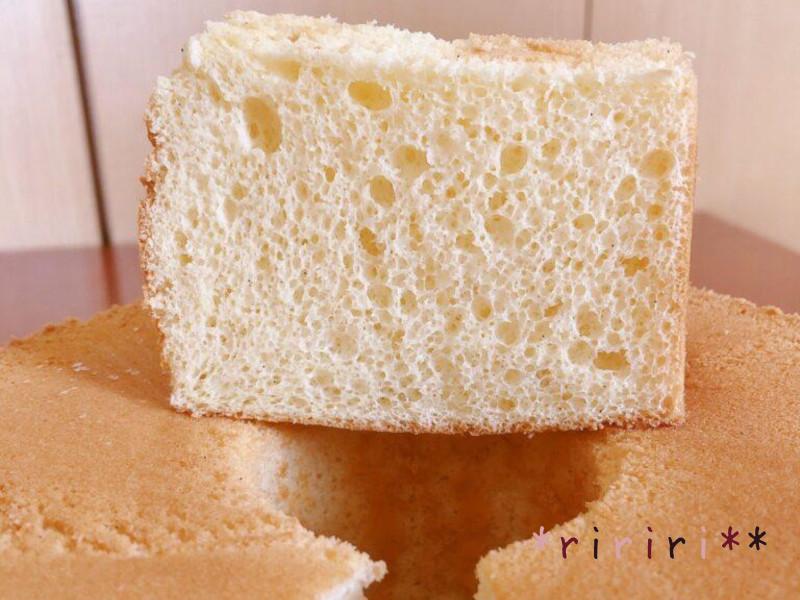
Fold in three additions. Use the first addition to loosen the yolk batter, then fold the remaining meringue with broad bottom-to-top strokes. Compare the baked height and bottom crumb.
Next-bake fixes
Make folding repeatable so the next bake can be compared fairly.
- Use a large bowl with enough space.
- Rotate the bowl as you fold.
- Scrape the bottom every few strokes.
- Stop when the batter is even, not when a fixed stroke count is reached.
Related troubleshooting
Use these related guides if the same cake also shows another visible symptom.