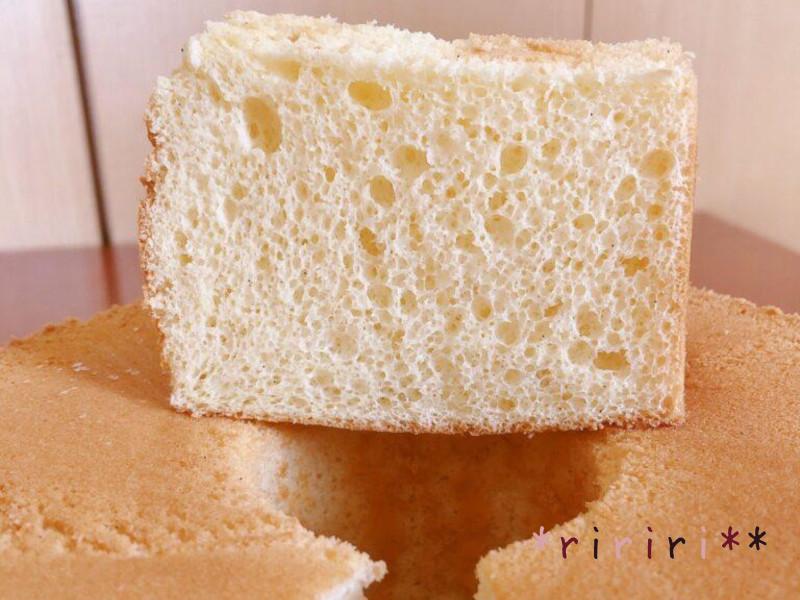
Banana adds flavor and moisture, but it also makes chiffon cake easier to turn dense. Treat banana as a heavy ingredient, not just a flavoring.
Use the plain base as the structure reference and add banana conservatively until the cake still rises and cools well.
How this variation changes the base
Banana changes the base by adding puree, sugar, fiber, and water. All of these can make the batter heavier.
Use the plain vanilla chiffon cake as the control recipe. Change only the flavor variable first, then compare rise, crumb, moisture, and cooling behavior before adjusting anything else.
- Base recipe role: Keep the egg foam, pan size, and cooling method as close to the base recipe as possible.
- Main risk: Too much banana can create a dense bottom layer or gummy center.
- Best first test: Use a modest amount of smooth banana puree and keep the batter from becoming loose.
What can go wrong
Banana chiffon cake often fails from excess puree, uneven mixing, or underbaking.
- Gummy center: Banana moisture needs enough bake time.
- Dense bottom: Heavy puree can settle if folding is uneven.
- Low rise: Extra weight can overpower weak meringue.
Failure prevention
Make the puree smooth and keep the final batter uniform from top to bottom.
If this variation collapses or becomes dense, go back to the plain base once before changing several ingredients at the same time.
- Mash or blend banana smoothly before adding it.
- Avoid large banana pieces in the batter.
- Fold from the bottom to prevent heavy streaks.
- Bake until the center passes a doneness check.
Related recipes and troubleshooting
Use these links to move between the base recipe, nearby flavor variations, and the troubleshooting guides if the cake fails.