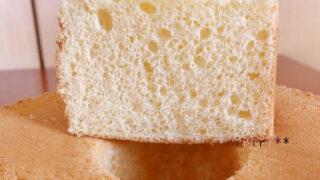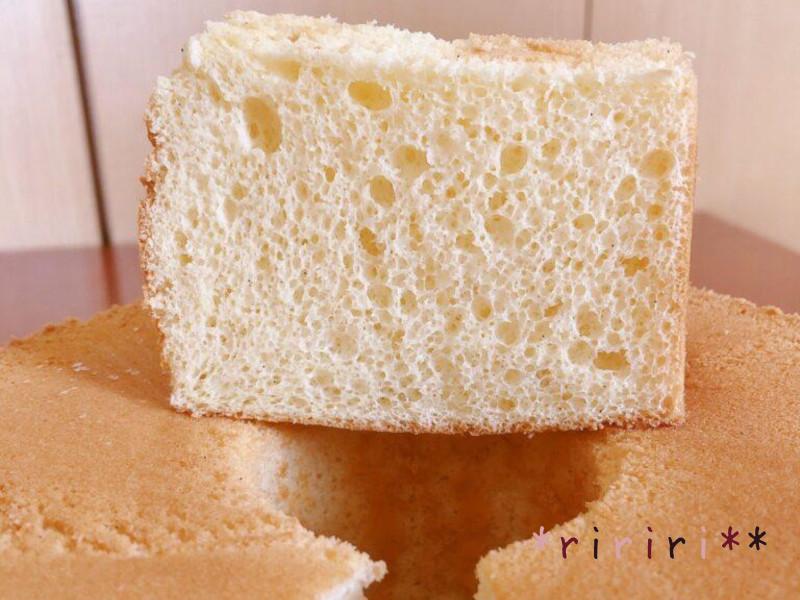
A dense bottom layer means part of the batter settled or failed to expand evenly. It is one of the clearest signs that the final batter was not uniform.
Before changing ingredient amounts, look at how the yolk batter and meringue were combined. Uneven mixing often leaves heavy batter at the bottom of the bowl.
Quick diagnosis
If only the lower layer is compact, the batter may have separated before baking or the heavier yolk batter may not have been fully folded into the foam.
- Thin dense line: Check uneven folding and batter left at the bottom of the bowl.
- Thick heavy base: Check liquid balance and underbaking.
- Dense plus shrinkage: Check bake time and steam release.
Likely causes
Dense bottom layers usually come from uneven final mixing, broken meringue, excess liquid, or batter that sat too long before baking.
- Uneven fold: Heavy streaks sink during baking.
- Broken foam: Air pockets collapse and leave compact crumb.
- Delayed baking: The batter loses air while waiting.
Quick test
After folding, scrape from the bottom of the bowl and check for heavier batter streaks. Bake immediately. If the bottom layer improves, mixing uniformity was the main issue.
Next-bake fixes
Make the final batter even without deflating it.
- Lighten the yolk batter with a small portion of meringue first.
- Fold from the bottom of the bowl with broad strokes.
- Pour into the pan as soon as the batter is ready.
- Avoid increasing liquid until the base recipe is stable.
Related troubleshooting
Use these related guides if the same cake also shows another visible symptom.